


How to Select Young Shiro Utsuri Koi: An In-Depth Guide

Updated: Aug 27, 2025
By Tri-Star Koi
If you’ve ever been captivated by the elegance of a black-and-white koi, then you’re likely familiar with the beauty and challenge of the Shiro Utsuri. This variety is often underrated compared to flashier koi, but among enthusiasts, it’s prized for its striking contrast, bold sumi, and subtle complexity. Picking out a high-quality Shiro Utsuri isn’t just about finding black and white patches it’s an art that requires patience, knowledge, and a good eye for detail. The challenge of selecting a stunning young Shiro Utsuri lies in choosing a koi whose full beauty has yet to unfold. It requires the vision to see the masterpiece before the picture is fully drawn.
At Tri-Star Koi, we’re fortunate to work closely with top Japanese breeders, and few names are more respected in the world of Shiro Utsuri than Omosako Koi Farm. Renowned for their focused breeding and consistent results, Omosako has raised the bar in developing Shiro Utsuri with superior pattern, skin, and body conformation. This farm is my favorite destination for sourcing this variety, as well as several other exceptional types. Their quality and selection consistently stand out, making their reputation a trusted choice for koi enthusiasts.
In this guide, we’ll break down everything you need to know to select a quality Shiro Utsuri koi, including how to evaluate body shape, skin quality, sumi (black pigment), shiroji (white skin), pattern balance, and growth potential. We’ll also discuss what makes the Omosako bloodline special and share tips on how to care for and nurture your Shiro Utsuri over time.

What is a Shiro Utsuri?
Before diving into selection tips, it’s important to understand what makes Shiro Utsuri unique. The term “Utsuri” means “reflection,” and this variety belongs to the Utsurimono group, which includes koi with black (sumi) combined with a secondary color. For Shiro Utsuri, the secondary color is white.
Unlike varieties like Showa or Sanke, which combine red, black, and white, Shiro Utsuri rely solely on the contrast between jet black sumi and pure white skin. This monochromatic scheme can be deceptively simple but requires exceptional balance and clarity to truly shine.

Why Select a Shiro Utsuri?
Shiro Utsuri koi make powerful statements in any pond, thanks to their high-contrast pattern and bold markings. But they’re more than just eye candy:
Elegant simplicity: The black-and-white palette can complement any water garden setting.
Development over time: Many Shiro Utsuri reveal new sumi and pattern complexity as they mature, making them fascinating to watch grow.
Durability: With proper care, these koi can live long, healthy lives with consistent pattern retention.
Unique character: Their bold patterns and strong presence often attract attention from hobbyists and judges alike.
However, selecting a Shiro Utsuri requires understanding what separates a koi with potential from one that may disappoint.
The 5 Pillars of Selecting a Quality Shiro Utsuri
1. Body Conformation — The Foundation of Growth and Longevity
No matter how stunning the colors, a koi’s body shape is the foundation for long-term beauty and health. This is the canvas in which the painting must be drawn on, an undesirable canvas will not yield a beautiful painting.
Look for a strong, well-proportioned body thick through the middle, tapering smoothly toward the tail.
The koi should have a full, firm belly with no pinching or sinking.
Fins should be well-formed, proportional, and undamaged.
The koi should move smoothly and confidently.
Poor body shape can lead to health problems, stunted growth, or an overall less impressive adult koi. Omosako koi are well known for their balanced and strong body structure, making them ideal for hobbyists wanting a fish that will mature gracefully and maintain health.
Tip: In my experience selecting Shiro Utsuri, the shape of the belly and the taper of the tail tube are crucial indicators of a koi’s growth potential. A sharp or dramatic transition from the belly to the odome usually results in an undesirable body shape.

2. Skin Quality — The Contrast Canvas
Without clean white skin, the sumi can’t make the impact it’s supposed to. Shiroji should be:
Milky White: The ideal Shiroji appears almost milky white free from any yellowing, dullness, or cloudiness. While this may sound contradictory, a milky white Shiroji base will eventually stretch and mature into the beautiful porcelain white that koi enthusiasts cherish.
Consistent: While some slight variations are natural, large blotches of discoloration or muddiness reduce the koi’s appeal.
Healthy: Bright skin is a good indicator of overall fish health and vitality.
Great skin quality isn’t just about appearance; it reflects the koi’s genetics and health, and allows the sumi to stand out sharply. Omosako bloodlines are known for producing koi with crisp, pure shiroji, which allows the sumi to “pop” with eye-catching contrast.
Guanine Deposits: Guanine is a crystalline deposit found in high-quality koi. The "sparkle" or "Gin Rin spots" along the dorsal and maseba regions are a clear sign of excellent skin quality, indicating that the koi is likely to have great longevity and vibrant skin.

3. Sumi (Black Pigmentation)
Because Shiro Utsuri are black-based koi, sumi is their defining feature. When assessing sumi, look for:
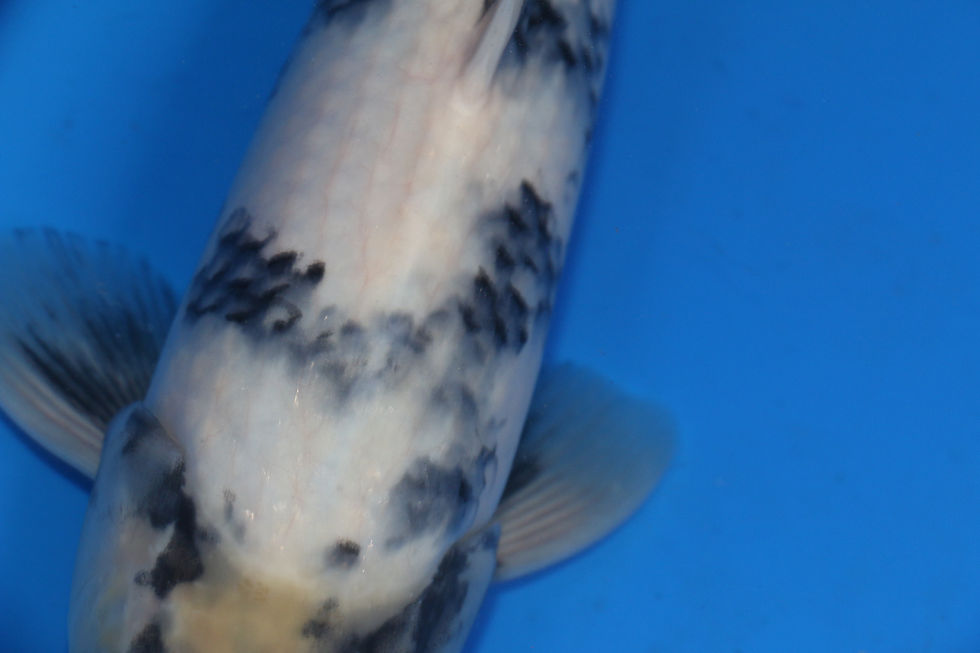
Depth and richness: The black should be a soft, light shade almost grey known as Kage Sumi. This type of sumi develops gradually over time and tends to have greater longevity compared to the deep, ink-like black sumi.
Coverage: Sumi should cover the koi in bold, clear patches that flow naturally along the body not scattered dots or smudges.
Balance: While perfect symmetry isn’t necessary, sumi should be evenly distributed across the head, shoulders, body, and tail.
Kage sumi: This is sumi that develops underneath the skin and often appears as a soft shadow in younger fish. It’s a good sign that the sumi will deepen as the koi matures.
Omosako Koi Farm has made a name for producing Shiro Utsuri with exceptionally clean and deep sumi. Their koi often start out lighter as tosai but develop dense sumi over time, sometimes even surprising owners with dramatic changes around age 2-3 years.
4. Pattern and Flow
The pattern on a Shiro Utsuri isn’t about mirror symmetry; it’s about balance and flow.
Sumi should be arranged in patches that create a natural rhythm along the body.
Look for sumi on the head, body, and tail for a complete, harmonious look.
The “odome,” a clean white space just before the tail, is a classic pattern feature that adds polish.
Sharp edges between black and white indicate careful breeding and clean color separation.
Patterns vary widely—from jagged, lightning-like sumi to broader, sweeping bands. Both can be beautiful when balanced well. Omosako koi often have patterns that mature gracefully, with sumi edges that sharpen over time.
5. Head Pattern and Menware — Character and Impact
The head is the koi’s face to the world. In Shiro Utsuri, a desirable feature is menware—a lightning-bolt or “M”-shaped sumi marking across the head.
Menware adds character and presence but isn’t required for quality.
Look for smooth, clean white skin on the head.
The head should be well-shaped, with good depth and no deformities.
The eyes should be bright and clear.
A koi with good head markings can command attention and elevate the overall impact of the fish.

The Development Journey: What to Expect Over Time
One of the most fascinating things about Shiro Utsuri especially Omosako bloodlines is how much they change as they grow. Many tosai (one-year-olds) look quite plain or even dull compared to what they become at two or three years old.
Sumi often deepens and sharpens with age. What looks like faint sumi on a tosai might develop into a bold, glossy black by nisai (two years).
Skin brightens and gains sheen as the koi matures, especially with proper care, nutrition, and water quality.
Patterns may shift subtly; sumi edges become cleaner, and the overall flow of the pattern improves.
Patience is key with Shiro Utsuri. A fish that doesn’t look impressive now may become stunning with time.


Why Buy From a Trusted Farm?
Because Shiro Utsuri take time to develop and can vary widely, it’s critical to buy from dealers who:
Source directly from reputable breeders like Omosako.
Have experience recognizing koi with good potential even if they don’t look finished yet.
The record for predicting the development of the bloodline will be much more consistent.
Practical Tips for Selecting Your Shiro Utsuri
Don't be deceived by the bright colors on young fish; instead, focus on their body shape and skin. Keep in mind that koi measuring 4-5 inches will grow significantly larger. If a koi develops all of its sumi at a young age, this sumi will stretch and appear very flat as the koi matures.
Check the pectoral fins for “moto-guro” (black at the base), a sign of symmetry as it ages.
Ask your dealer about the koi’s bloodline and development history.
Give your koi time to grow—don’t expect finished patterns overnight.
Maintain excellent water quality and nutrition to support skin and sumi development.

Selecting a Shiro Utsuri koi is about much more than picking a pretty fish. It’s about understanding the balance of body shape, skin quality, color, and long-term development potential. Omosako Koi Farm has spent decades perfecting these traits, making their bloodline a solid choice for anyone serious about Shiro Utsuri.
If you invest in a quality Shiro from a trusted source, you’re not just buying a koi—you’re beginning a relationship with a living work of art that will grow more beautiful year after year.
If you have questions or want help selecting your Shiro Utsuri, please reach out. At Tri-Star Koi, we’re here to guide you every step of the way.
— Marlon @ Tri-Star Koi


